
|
It has been a busy, busy year for La Rosa Midwifery birth team. I wanted to share some of the projects that I have worked on. One that was the culmination of just about 2 years was the NARM Prep Jumpstart Program, through Californian's for the Advancement of Midwifery. This was a study retreat for people of color only. Us midwives and midwifery supporters worked hard together on the Birth Disparities and Equity Team to bring this program to life and create a learning and nurturing environment for student midwives of color. I also have been holding multiple gatherings for my clients; such as a fall gathering and Community Walk & Talks. My practice has had students now for the past 2 years. This has been a wonderful experience of growth and enrichment. Having students is something that is very important to me and to the advancement of midwifery in my opinion. Together we learn and grow, they have been a great reflection for me. Currently my student is Ana Ruiz, who is a dedicated and intuitive birth worker she is from Chino Hills and has been a lovely addition to the La Rosa team. In this past year I have hosted multiple Skill's Days for my students and other local student midwives. We have gone over things like setting up and administering IV's, suturing skills, basic vitals and newborn exams; all of theses things help to enrich and grow the skills of these students to have and use in practice. We even held an amazing well-person clinic day that was open to the community, where we offered well person exams, paps, STI testing and breast/chest exams at lab cost only, no fee for the exam itself. I have been an active member on the CALM (California Association of Licensed Midwives) board of directors. The students Julie and Ana hosted Childbirth education courses, which will be offered again in the new year. We participated in a photoshoot for CALM and for the advancement of midwifery. We have all taken multiple Spinning Babies classes and learned so much about body balancing and shifting the paradigm of the cervix centric model for labor and delivery currently. This has helped change the way that we view birth and the approach of our care and practice. With all of this life has been busy yet fulfilling. We have welcomed many babies earthside and witnessed many mamas be born. For this upcoming year we have plans of a Newborn Care 101 class, more Childbirth Education courses, workshop for providing culturally inclusive care for LGBTQ families, another Well-Person Day and much more, so stay tuned and connect on the Instagram and Facebook pages. Intentions for La Rosa Midwifery this next year of 2020 are
0 Comments
 I have been trucking along on my fermentation journey, attempting to get probiotics in a whole food DIY way. I wanted to follow up because I know you all have just been waiting for my follow up haven't you! So I wish I could say that my sourdough bread is on point now but, unfortunately not so. That being said I do think that I have figured out a formula for my next batch. I recently heard that it takes making sourdough 10 times to get into the rhythm. I am pretty determined but did get a little defeated last bake so I took a little break and am ready to get back at it, this week actually. Sauerkraut I have had much better success with my sauerkraut. I am working on my 3rd batch and I am happy to report that my honey has been asking for more. So basically I am having to have it on rotation at all times. This time I am making it with purple cabbage which turns out to be a super cool fluorescent pink. I just love how very easy and yummy sauerkraut is! I followed the simple recipe from my little book "Wild Fermentation" by Sandor Ellix Katz which you can find here: www.wildfermentation.com Ingredients for one gallon: Cabbage (approximately 5 pounds) Sea salt (approximately 3 tablespoons) Special Equipment: Ceramic crock or food-grade plastic bucket. Cylindrical shape is what your looking for. Plate that fits inside crock or bucket. One gallon jug filled with water. Cloth cover Process: Chop or grate cabbage, finely is what i've found works best, with or without hearts, however you like it. I love the purple cabbage as it turns into bright pink kraut. Sprinkle salt on the cabbage as you chop it. The salt makes the cabbage sweat, and this creates the brine (salty water) in which the cabbage can ferment and sour without rotting. Do not use iodized salt because iodine inhibits bacterial action. Three tablespoons of salt is a rough average. According to the food scientists, the sauerkraut process works best in 2-3 percent brine solution. I never measure the salt, I just shake some on after I chop up each quarter cabbage. I use more salt, in the summer, less in the winter. It is possible to make krautwithoutsalt, using ground kelp and other sea vegetables instead. Add other vegetables (onions, garlic, other greens, brussel sprouts, small whole heads of cabbage, whatever) and herbs and spices (caraway seeds, dill seeds, anything) as you like. Experiment. Mix ingredients together and pack into crock/bucket. Pack just a bit into the crock at a time and tamp it down hard using your fists or a bean masher. The tamping packs the kraut tight in the bucket and helps force water to of the cabbage. Cover kraut with a plate or some other lid that fits snugly inside the bucket. Place a clean weight, like a gallon jug filled with water on the cover. This weight is what will keep the cabbage submerged in the brine. Cover the whole thing with a cloth or pillow case to keep dust and flies out. Press down on the weight periodically until the brine rises above the cover. This can take a while, as the salt slowly draws water out of the cabbage. Some cabbage, particularly if it is old, simply contains less water. If for some reason the brine doesn't rise above the plate level by the next day, add enough salt water to bring the brine level above the plate. Check the kraut after a few days. If any moldy scum appears on the surface, scraps it away. Taste the kraut. It should start to be tangy after a few days, and the taste gets stronger as time passes. The process is faster in summer, slower in winter. Enjoy, Scoop out a bowlful at a time and keep it in the fridge. Each time you scoop out some kraut out of the bucket, you have to repack it carefully. Make sure the kraut is packed tight in the bucket, the surface is level, and the cover and weight are clean. Sometimes brine evaporates, so if the kraut is not submerged below brine just add salted water as necessary. Develop a rhythm Start a new batch before the previous batch runs out, especially if you have a partner who is loving it and eating it by the bowlful. I take what remains in the bucket out, pack the bucket with fresh salted cabbage, then pour the old kraut and its juices over the new kraut. This gives the new batch a boost with an active culture starter. 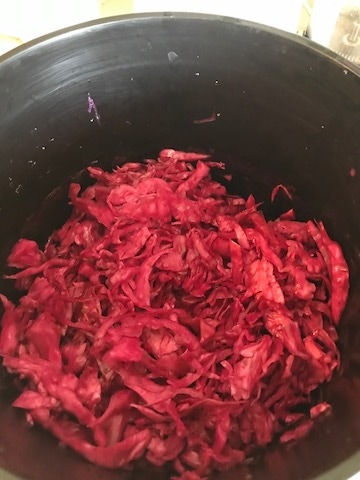 My most recent batch of hot pink sauerkraut, not quite ready, I want it a little more tender. Because its been hot I have had to add some salted brine water once. Can't wait to eat it :)
I have also had great success with keeping my S.C.O.B.Y alive and having a rotation of kombucha going, for my last batch I added black cherry tea which added a really yummy flavor to the tea. I hope you have enjoyed my sauerkraut and fermentation frenzy update and I hope you have success getting probiotics from home made sources. I have recently been getting lots of questions on how to increase fertility and have had many close people in my life trying to conceive. This has prompted me to read up on ways to increase fertility and to call on my midwifery training. What I have been focusing on is just some generally good supplements to increase fertility and to get the body ready to welcome a baby, a sort of pre-conception body prep.
Eating a wide variety of plant-based foods is a great way to get macro and micro nutrients, even with a great diet it may be difficult to get the amount of vitamins necessary to increase fertility. Many care providers suggest taking a prenatal vitamin for 3-6 months before conceiving to boost vitamin levels up, not all prenatal vitamins are equal and something that is plant-whole-food based is much more optimum. The problem with a combined prenatal is that it is not individualized to your needs and most do not have all that you need for specific vitamins such as Vitamin D3 or have folic acid as opposed to folate or methylfolate. Disclosure: This is by no means an exhaustive resource on this subject and if you have been trying to conceive for a year or more, it is best to consult with a qualified care provider to help guide you through your fertility options. So here is a list of some herbs and supplements which can boost fertility:
Nutrition is paramount to health and fertility as it is really the foundation of what is to come. Here is a list of nutritional things to consider and follow.
Please share below any other supplements that you have found to work for you in your fertility journey I would love to hear your stories and ideas! So let's talk sourdough bread and how to begin the process. I love me a yummy crusty sourdough slice slathered with rich butter and so I decided a few months back to create my own starter and start baking it myself! So far it has been full of trial and error, but so goes the DIY struggle I suppose (and part of the fun). I would say that each loaf has been better then the last but I still am searching for the perfect loaf/perfect starter. I love all things fermented and this is partly because I know how important gut health is to ones overall health. Probiotics are especially important during pregnancy as quality probiotics:
I have been in a fermentation frenzy this past month and wanted to share a little about it. I started my own kombucha S.C.O.B.Y from one store bought bottle, made sauerkraut, and have continued my sourdough bread journey :) All of these fermented foods increase the probiotics in your system and are so very essential in any pregnant mamas daily regimen especially when they are home made and fresh. Lets start with the sourdough starter: I loved the idea that I could create my own sourdough starter from just 2 simple ingredients: flour and water. The rest is the magic of natural bacteria in the air, how cool is that! There was so many options and ways to go about beginning the sourdough starter I finally chose to follow this recipe: www.culturesforhealth.com/learn/sourdough/how-to-obtain-sourdough-starter/ Here's what you need: Mason jar or any glass jar, pyrex spatula, measuring cups, rye flour & all purpose flour (or any flour you choose, I chose rye because it is a hardier flour and is less easy to mess up), and filtered room temperature water. SOURDOUGH STARTER RECIPE
Overall, consuming probiotics is a benefit to your health and the health of your baby, however you can get them. I personally think getting them from home made sources is the best way so I will continue to write about the different methods of fermenting here on my blog, for your viewing pleasures... 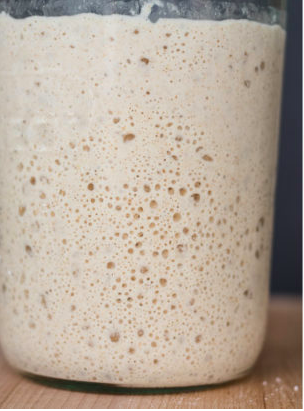  Water is life! Cells are fundamental to life.
Water is important to cells because without it they would not be able to remove waste, bring in nutrients or transport oxygen. The body is a very intricate system where many parts rely on each other. While it is always a good idea to keep the body hydrated, there are certain times when changes in the body call for more water. One of these times is during pregnancy. Water can be the answer to alleviating many of the discomforts of pregnancy and aids in preparing the body for these physiological changes. The fluid acts as the body’s transportation system, and carries nutrients through the blood to the baby. Also, flushing out the system and diluting urine with water prevents urinary tract infections, which are common in pregnancy. Perhaps the biggest reason to drink water however is to keep the body hydrated. Dehydration in pregnant women can be very serious. Hormones change the way women store water during pregnancy, so they begin to retain water and drinking plenty of water combats that. Much of that water is used in the amniotic sack. Amniotic fluid alone needs to replenish itself every hour by using roughly a cup of water stored in the body. Replacing that water will insure the unborn baby is protected within the womb. Since the blood volume increases to nearly double by the eighth month of pregnancy, it is necessary to drink even more water to compensate. Thicker blood can lead to hypertension and other cardiovascular problems. Because dehydration can cause contractions, lack of water in the third trimester is one of the primary causes of premature labor. Premature labor can have many risks to the newborn baby. However, some cases of premature labor have been stopped just by giving the mother enough water to re-hydrate her body. Pregnant women should be sure to drink at least eight 8-ounce glasses of water each day, which is in addition to the normal intake of other recommended foods. The benefits of drinking water during pregnancy include healthier skin, less acne, washing away of unnecessary sodium, less chance for preterm labor or miscarriage and better bowel movements. Drinking water can, believe it or not, also help prevent that nausea known as morning sickness, as care providers recommend drinking plenty of fluid between meals. Ways to get enough water throughout the day
Pregnancy Herbal Infusion
 Today after I warmed up my bowl of homemade pozole, watched multiple news reports and thought about the state of affairs in this world I just wanted a distraction for the day. Well what happened was I ended up spending the entire day overhauling my website; rearranging, editing, researching and beautifying my website...isn't that the best when you are productive by accident. In all of this rearranging and editing I decided to add a page on belly binding as it's something I offer in my Midwifery practice and think is a time honored tradition that has many benefits. So from the information that I compiled I thought it was worthy of my first blog post. Now writing a blog is something I've been wanting to do for some time. Its one of those things thats been forever on my To-do list! That being said.. be gentle. I'm no writer but I do tend to talk a whole lot...it comes with the territory of being a Midwife and giving informed consent and empowering women to make the best decisions for their families. So here ya go just a little bit about belly binding: Belly binding has been around for hundred’s of years if not more, all around the world and across many cultures including: Latin American, Malaysian, Japanese, Native American and many more. Each culture has specific practices regarding "belly binding" and postpartum care in general. My first experiences with belly binding in the postpartum period was when I had the honor of working with Mexican moms at a birth center in the border town of San Diego. They taught me how to gently wrap the abdomen and pelvic area with a faja, to protect the womb. The faja is believed to prevent air from entering inside the woman, to ensure the uterus from falling down and thought to help the uterus close and contract. There are many types and styles of material used to make a faja or belly wrap but I would say most common these days are cloth and mixed material i.e.; cotton and elastic. The ones that I was introduced to and have had great success with are much like a large ace bandage made of a mixture of cotton and elastic. The faja is typically worn for at least 2 weeks postpartum, except at night. In Latin American cultures, the position of the uterus is at the very core of traditional birth medicine. It was common and still is found that abdominal massage after the birth and wrapping are used not just to heal the muscle wall, but to actually help place the “womb” back in its proper position. Traditionally, Malaysians believe that the womb is the center of a woman’s well being and that it is important to honor its role in all stages of life. However, the womb is especially honored after the birth of a child. In order to promote the health and healing of the womb in the postpartum period, Malaysian women are bound with cotton around their abdomen. We know this as Bengkung Belly Binding. As a Midwife I have had first hand experience with the benefits of belly binding postpartum, in the immediate and beyond to protect the womb and abdominal area. Belly binding with a bandage is a gentle way of binding the new mother, which I prefer during the first weeks after birth. The bandage style is ideal for all mothers as it is breathable and has enough elasticity to stretch and bind the belly tight enough for desired benefits. It is also a good option for mothers who have delivered by cesarean birth as they have enough elasticity to stretch and bind the belly just tight or loose enough. They are gentle enough to protect the incision area and are thin enough to provide enough ventilation to protect from infection. Many moms who have given birth report that their belly feels squishy after several months of a taught firm belly and it feels a "little weird". Something that I hear almost every time I bind a mom is that it feels so "secure" and like it is holding everything together because it is firm. So using a faja aka belly binding has many benefits such as relief from birth 'afterpains' (which typically become stronger with each child), encourages internal organs to migrate to their original place, corrects diastasis recti, reduces postpartum internal organ swelling and gives the mother a sense of security and togetherness. 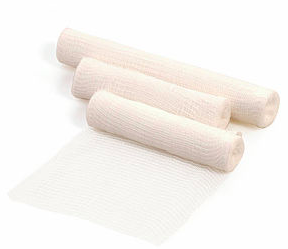 |
Author:
|
 RSS Feed
Proudly powered by Weebly